Buy drivein.eu ?
We are moving the project
drivein.eu .
Are you interested in purchasing the domain
drivein.eu ?
domain@kv-gmbh.de · 0541-91531010
Buy drivein.eu ?
What is a cyclotron in physics?
A cyclotron is a type of particle accelerator used in physics to accelerate charged particles, such as protons or electrons, to high energies. It consists of two hollow, semicircular metal electrodes called "dees" that are placed in a strong magnetic field. An alternating electric field is applied between the dees, causing the charged particles to spiral outward and gain energy with each revolution. Cyclotrons are used in various fields of research, including nuclear physics, medical imaging, and radiation therapy. **
What is the frequency of the cyclotron?
The frequency of the cyclotron is determined by the strength of the magnetic field and the mass of the charged particle being accelerated. In general, the frequency is given by the equation f = qB / (2πm), where f is the frequency, q is the charge of the particle, B is the magnetic field strength, and m is the mass of the particle. The frequency is typically in the range of millions to billions of cycles per second, or megahertz to gigahertz. This high frequency allows the cyclotron to accelerate particles to very high energies for use in various applications such as particle physics research and medical treatments. **


Similar search terms for Cyclotron
Top-Angebote
Products related to Cyclotron:
-
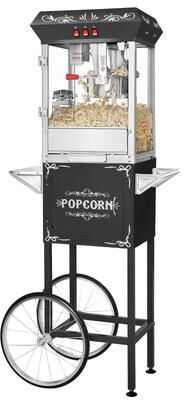
Kodotan sofa 12oz Popcorn Machine Cart, Popcorn Cart with Wheels, Vintage Popcorn Machine with Stainless Steel KettleEfficient 12oz Popcorn Maker Machine: This theater-style popcorn maker machine features a powerful 850W stainless-steel kettle.453,59 $*Shipping: 0,00 $Secure redirect to the provider



-
Why can't relativistic speeds be generated with a cyclotron?
Relativistic speeds cannot be generated with a cyclotron because the speed of the particles in a cyclotron is limited by the strength of the magnetic field and the size of the accelerator. As particles approach the speed of light, their mass increases, making it more difficult to accelerate them further. Additionally, the energy required to reach relativistic speeds becomes prohibitively high, making it impractical to achieve with a cyclotron. Therefore, other types of particle accelerators, such as linear accelerators or synchrotrons, are used to reach relativistic speeds. **
-
How do you calculate the radius of a cyclotron?
The radius of a cyclotron can be calculated using the equation: r = mv / (qB), where r is the radius, m is the mass of the particle, v is the velocity of the particle, q is the charge of the particle, and B is the magnetic field strength. This equation is derived from the centripetal force required to keep the particle in a circular path within the magnetic field. By rearranging the equation, the radius can be solved for using the known values of the mass, velocity, charge, and magnetic field strength of the particle. **
-
How can the speed of a particle in the cyclotron be calculated?
The speed of a particle in a cyclotron can be calculated using the equation v = rω, where v is the speed of the particle, r is the radius of the cyclotron, and ω is the angular frequency of the particle's motion. The angular frequency can be found using the equation ω = qB/m, where q is the charge of the particle, B is the magnetic field strength, and m is the mass of the particle. By combining these equations, the speed of the particle in the cyclotron can be determined. **
-
What is the axial motion in relation to the Penning trap magnetron cyclotron?
In the Penning trap magnetron cyclotron, the axial motion refers to the oscillation of charged particles along the axis of the trap. This motion is perpendicular to the magnetic field lines and is typically driven by an oscillating electric field. The axial motion helps to confine the particles radially within the trap and can be controlled to manipulate the behavior of the particles within the trap. By adjusting the frequency and amplitude of the electric field driving the axial motion, researchers can tune the behavior of the particles in the trap for various applications. **

What is the axial motion in relation to the Penning trap, magnetron, and cyclotron?
Axial motion refers to the motion of charged particles along the axis of a magnetic field. In a Penning trap, the axial motion occurs as the particles oscillate back and forth along the magnetic field lines. In a magnetron, the axial motion is the circular motion of the electrons as they travel along the magnetic field lines in a vacuum tube. In a cyclotron, the axial motion is the spiral motion of the charged particles as they are accelerated by an oscillating electric field and travel along the magnetic field lines in a circular path. **
What else should cinemas offer besides popcorn and snacks?
Cinemas should consider offering a variety of healthier snack options such as fruit cups, veggie sticks, or air-popped popcorn. Additionally, they could provide more diverse food options like sandwiches, salads, or wraps to cater to different dietary preferences. Offering a selection of beverages beyond just soda, such as smoothies, fresh juices, or flavored water, could also enhance the overall cinema experience for patrons. Finally, providing comfortable seating options, clean facilities, and a welcoming atmosphere can further improve the movie-watching experience for customers. **
Top-Angebote
Products related to Cyclotron:
-
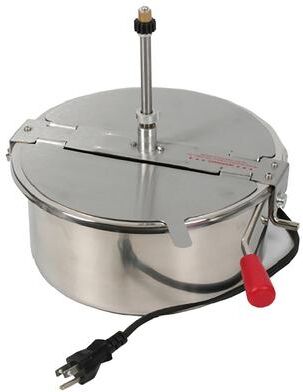
Replacement Popcorn Kettle For Great Northern Popcorn sThe Great Northern Popcorn Company Popcorn Kettle! An industry leading 10 ounce kettle operating on 850 watts (Commercial Quality and Certified). These kettles have been tested an guaranteed to work with your compatible Great Northern Popcorn machine!112,97 $*Shipping: 0,00 $Secure redirect to the provider
-
Kodotan sofa 12oz Popcorn Machine Cart, Popcorn Cart with Wheels, Vintage Popcorn Machine with Stainless Steel KettleEfficient 12oz Popcorn Maker Machine: This theater-style popcorn maker machine features a powerful 850W stainless-steel kettle.453,59 $*Shipping: 0,00 $Secure redirect to the provider
-
What is a cyclotron in physics?
A cyclotron is a type of particle accelerator used in physics to accelerate charged particles, such as protons or electrons, to high energies. It consists of two hollow, semicircular metal electrodes called "dees" that are placed in a strong magnetic field. An alternating electric field is applied between the dees, causing the charged particles to spiral outward and gain energy with each revolution. Cyclotrons are used in various fields of research, including nuclear physics, medical imaging, and radiation therapy. **
-
What is the frequency of the cyclotron?
The frequency of the cyclotron is determined by the strength of the magnetic field and the mass of the charged particle being accelerated. In general, the frequency is given by the equation f = qB / (2πm), where f is the frequency, q is the charge of the particle, B is the magnetic field strength, and m is the mass of the particle. The frequency is typically in the range of millions to billions of cycles per second, or megahertz to gigahertz. This high frequency allows the cyclotron to accelerate particles to very high energies for use in various applications such as particle physics research and medical treatments. **
-
Why can't relativistic speeds be generated with a cyclotron?
Relativistic speeds cannot be generated with a cyclotron because the speed of the particles in a cyclotron is limited by the strength of the magnetic field and the size of the accelerator. As particles approach the speed of light, their mass increases, making it more difficult to accelerate them further. Additionally, the energy required to reach relativistic speeds becomes prohibitively high, making it impractical to achieve with a cyclotron. Therefore, other types of particle accelerators, such as linear accelerators or synchrotrons, are used to reach relativistic speeds. **
-
How do you calculate the radius of a cyclotron?
The radius of a cyclotron can be calculated using the equation: r = mv / (qB), where r is the radius, m is the mass of the particle, v is the velocity of the particle, q is the charge of the particle, and B is the magnetic field strength. This equation is derived from the centripetal force required to keep the particle in a circular path within the magnetic field. By rearranging the equation, the radius can be solved for using the known values of the mass, velocity, charge, and magnetic field strength of the particle. **
Similar search terms for Cyclotron
-
Replacement Popcorn Kettle For Great Northern Popcorn sThe Great Northern Popcorn Company Popcorn Kettle! An industry leading 10 ounce kettle operating on 850 watts (Commercial Quality and Certified). These kettles have been tested an guaranteed to work with your compatible Great Northern Popcorn machine!177,99 $*Shipping: 0,00 $Secure redirect to the provider
-
How can the speed of a particle in the cyclotron be calculated?
The speed of a particle in a cyclotron can be calculated using the equation v = rω, where v is the speed of the particle, r is the radius of the cyclotron, and ω is the angular frequency of the particle's motion. The angular frequency can be found using the equation ω = qB/m, where q is the charge of the particle, B is the magnetic field strength, and m is the mass of the particle. By combining these equations, the speed of the particle in the cyclotron can be determined. **
-
What is the axial motion in relation to the Penning trap magnetron cyclotron?
In the Penning trap magnetron cyclotron, the axial motion refers to the oscillation of charged particles along the axis of the trap. This motion is perpendicular to the magnetic field lines and is typically driven by an oscillating electric field. The axial motion helps to confine the particles radially within the trap and can be controlled to manipulate the behavior of the particles within the trap. By adjusting the frequency and amplitude of the electric field driving the axial motion, researchers can tune the behavior of the particles in the trap for various applications. **
-
What is the axial motion in relation to the Penning trap, magnetron, and cyclotron?
Axial motion refers to the motion of charged particles along the axis of a magnetic field. In a Penning trap, the axial motion occurs as the particles oscillate back and forth along the magnetic field lines. In a magnetron, the axial motion is the circular motion of the electrons as they travel along the magnetic field lines in a vacuum tube. In a cyclotron, the axial motion is the spiral motion of the charged particles as they are accelerated by an oscillating electric field and travel along the magnetic field lines in a circular path. **
-
What else should cinemas offer besides popcorn and snacks?
Cinemas should consider offering a variety of healthier snack options such as fruit cups, veggie sticks, or air-popped popcorn. Additionally, they could provide more diverse food options like sandwiches, salads, or wraps to cater to different dietary preferences. Offering a selection of beverages beyond just soda, such as smoothies, fresh juices, or flavored water, could also enhance the overall cinema experience for patrons. Finally, providing comfortable seating options, clean facilities, and a welcoming atmosphere can further improve the movie-watching experience for customers. **
* All prices are inclusive of VAT and, if applicable, plus shipping costs. The offer information is based on the details provided by the respective shop and is updated through automated processes. Real-time updates do not occur, so deviations can occur in individual cases. ** Note: Parts of this content were created by AI.